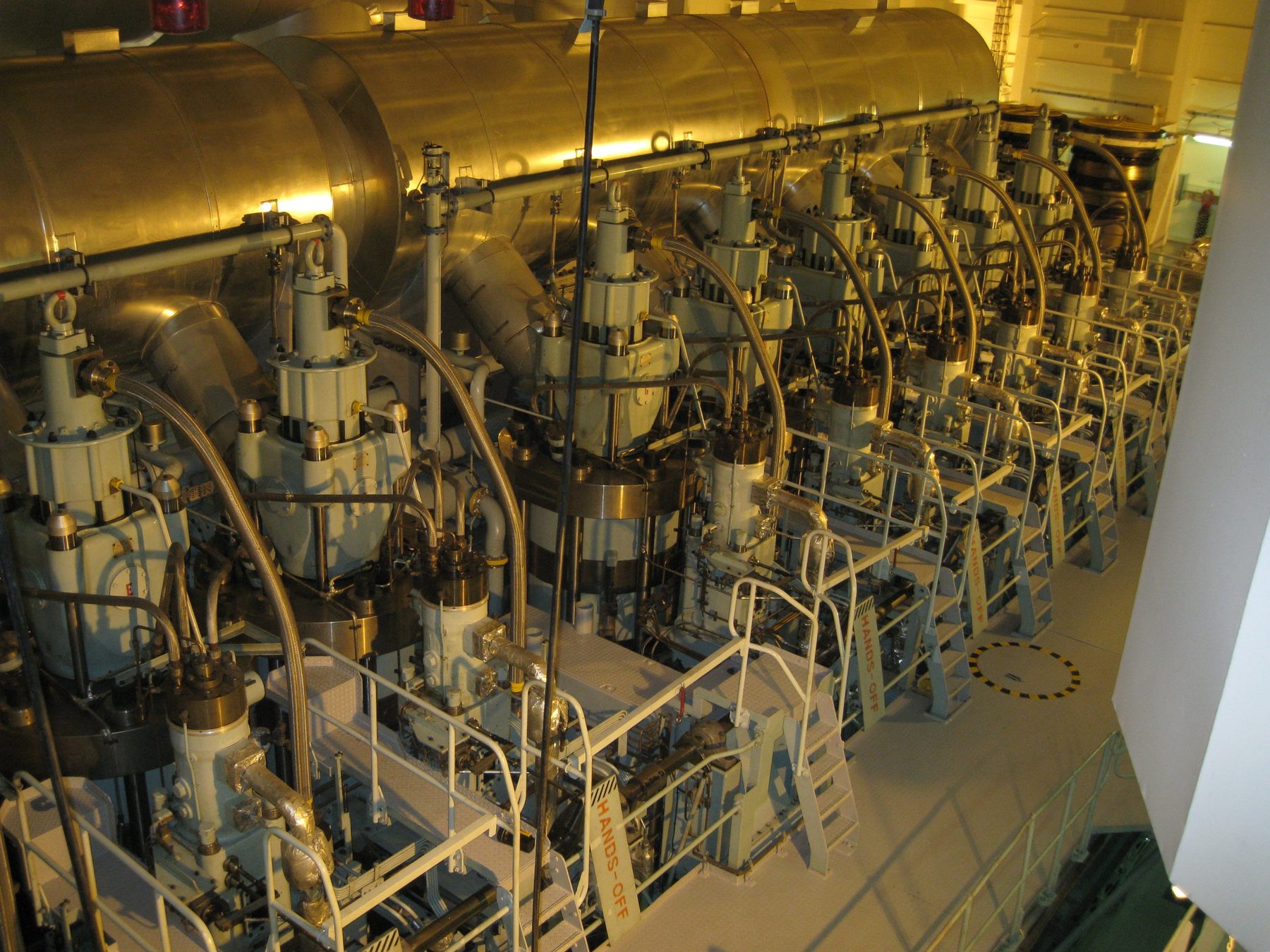
Cylinder condition monitoring for two-stroke engines
Know the condition of every cylinder without lifting a piston.
Flame Diagnostic reads the fuel system, engine performance, and cylinder oil and condition together, and reports unit by unit what is happening inside your two-stroke engines and what to do about it. Your technical department in one report.
Flame SDA covers the engine designers' recommended scavenge drain (scrape-down) oil reporting at low cost, and delivers much more than a laboratory sheet.
- Drain oil analysis since 1998
- Independent, and trusted by ship managers and engine designers
- First to understand and use dilution and contamination correction in drain oil sampling
- Analysis used by an engine designer in its own development testing
What the reports do for you
Early warning
Wear, deposits, blow-by and water usually show in the drain oil before they show in performance data or at a port inspection.
Overhaul by condition
Open the units that need it, when they need it, and let the others run on with evidence to support the decision.
The right feed rate and BN
Cylinder oil brought to the lowest safe feed rate for the fuel in use, with less waste drain oil to dispose of.
The designers' recommendation met
Accredited laboratory analysis at the intervals the engine designers specify, with the interpretation a laboratory sheet does not provide.
Flame SDA and Flame Diagnostic
Two reports
Both use the same accredited laboratory and the same dilution correction. They differ in what goes in and how far the reading goes.
Flame SDA
The engine designers' recommended scrape-down oil reporting, and much more than a laboratory sheet.
- Tested in an ISO/IEC 17025-accredited laboratory to ASTM, ISO and IP methods
- Evidence-based insights, corrected for dilution
- Practical lubrication guidance
- Optional fuel purifier and service tank check: cat fines and water
- Built on more than 25 years of Flame Diagnostic data
- At low cost
Flame Diagnostic
A comprehensive report covering the fuel system, engine performance, and cylinder oil and condition. Your technical department in one report.
- Everything in Flame SDA, plus:
- Correlation between fuel, lubrication and performance
- Fuel purifier and separator performance, and fuel system integrity, verified
- Detailed advice and recommendations across the engine
Independence
Independent
Flame Marine has been an independent provider of engine performance and oil analysis services since 1998, and its papers published by CIMAC, some of them jointly with an engine designer, have helped shape the role of scavenge drain analysis. Most scavenge drain oil analysis is offered by lubricant suppliers as part of their service. Flame Marine supplies no lubricant and sells no fuel, so its advice on feed rate and BN has no commercial interest in the quantity or grade of oil consumed. The samples go to an accredited laboratory with no stake in the result.
Dilution
Every drain oil sample is a mixture
Scavenge drain oil is used cylinder oil mixed with system oil from the stuffing box, unburned fuel and water. Read as if it were pure cylinder oil, it understates wear and overstates the loss of BN. Flame Marine was the first to understand and use dilution and contamination correction in drain oil sampling: every figure in a Flame report is corrected, using Flame ADT, before it is analysed.
Guidance
Specified by the engine designers
Flame reports cover the three two-stroke designs in service: MAN B&W (Everllence), WinGD and UE (Japan Engine Corporation, formerly Mitsubishi). The major designers now specify regular laboratory analysis of scavenge drain oil. The samples have to be taken. The value is in how they are read.
Analysis by an accredited laboratory at least every three months or 1,500 running hours, alongside monthly inspection through the scavenge ports. Total and magnetic iron, read against limits that depend on fuel sulphur and corrected for feed rate, and residual BN against the fresh cylinder oil.
Regular analysis of residual BN and iron for each cylinder, repeated after any change of feed rate, fuel or cylinder oil, with laboratory results as the reference for feed rate and BN decisions.
UE engines are sampled and reported on the same basis. Summaries for orientation; always refer to the current issue of the designer's guidance for your engine.
Inside a report
What the report tells you
A laboratory sheet gives you iron and BN. A Flame report reads them, corrected, with the engine's history and tells you what they mean for each cylinder.

Beyond the assessment
The report also carries the analysis results for every cylinder, corrected for contamination and dilution, plotted against the engine designer's zones for iron and BN, within limits, warning and alert, and trended against the vessel's earlier samples. Flame Diagnostic adds combustion and injection, feed rate and BN set against the performance data as well as the drain oil, fuel treatment on board, and the engine parameters kept for the technical file.
Every finding is cross-checked against the others. A reported Pmax that does not fit the combustion picture is questioned, not passed on.
In the engine
What the drain oil sees first
By the time a problem is visible at a port inspection or in the performance data, its chemistry has been in the drain oil for some time.


How it works
From sample to report
Nothing is tested on board and the engine is never stopped for it.
-
Samples and readings, taken together
The crew draw scavenge drain oil from every cylinder, samples of the fresh cylinder oil and the system oil, and fuel samples, and record the performance data at the same time.
-
Accredited laboratory analysis
The samples go by courier to the laboratory: iron, total and magnetic, wear metals, residual BN, water, contaminants and additive elements.
-
Interpretation, unit by unit
The results are read with the performance data and the engine's history, and the report sets out findings and recommendations for each unit.
For service providers
Flame Diagnostic also runs behind condition monitoring services that other organisations deliver under their own names.
Talk to us about your fleet
Tell us the engine types and the number of vessels, and we will come back to you with how sampling would work for you and what the reports would cover.